
Dragon Age: Origins is still really good
I replayed Dragon Age: Origins and its DLCs on PC about a year and a half ago, and it still slaps.
Let’s start with the obvious: the cover art is awesome. Iconic. My favourite cover art of any video game.
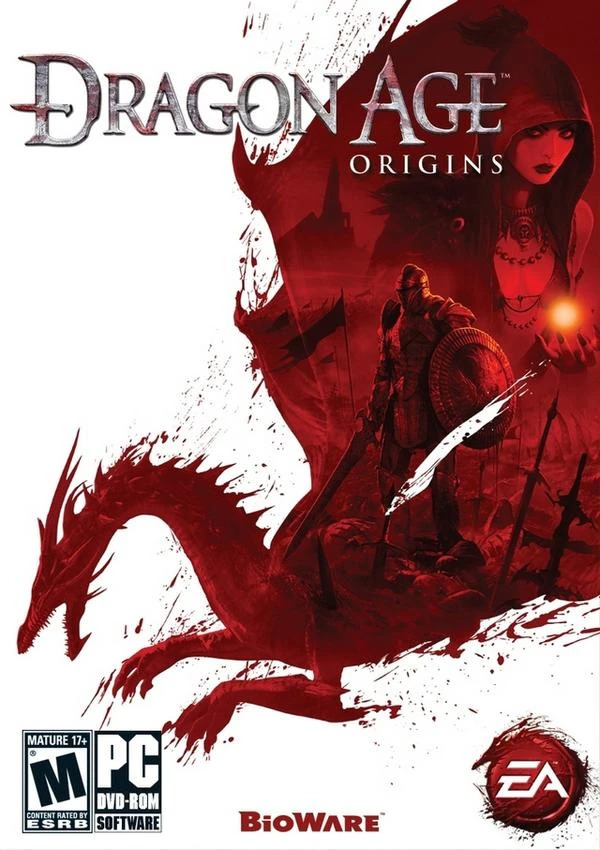
Actually, the game’s soundtrack has an even better version of the cover art.

The music is also great, especially its GOATed title track by composer Inon Zur. Imagine being a high schooler firing up a new game and being greeted with that. RPG players talk about being stuck on the character creation screen, but that music kept me glued to the main menu.
I still like the graphics, too. I know they are “ugly”, but they are ugly in a way I find comforting. DA:O belonged to the last era of gaming before graphical fidelity basically saturated and every big-budget game started to look the same. It wears its dark fantasy pretensions in various shades of brown and sprays of blood. It looks like 2009 in the best possible way.
Of course, good presentation means little for an RPG if the world is boring or the characters are unlikable. Thankfully, DA:O works because it is so completely unselfconscious about being a dark fantasy RPG, and the characters are better for it. They are prickly, well-voiced, and rooted in the setting. Each character carries a piece of the world without being reduced to it.
Mages are also super overpowered. There is little reason to play any other class, except as a self-imposed challenge or for the sake of completeness (the game’s titular origin system offers six unique stories depending on your choice of race and background, but mages always get the same one). They are much more powerful and mechanically interesting than warriors and rogues. But this is not so much a failure of balance as a feat of worldbuilding and gameplay–narrative coherence. Much of the game’s story revolves around the reasons mages are imprisoned, hunted, and feared, as they are constantly at risk of being possessed by demons. Sadly, the same cannot be said of blood magic, which the story treats as a forbidden art but the game treats as just a powerful skill tree.
The secret to the moment-to-moment enjoyment of DA:O is its RTwP (real-time with pause) combat system, which remains my favourite implementation ever (Pillars of Eternity II is a close second). It works marvelously with the game’s smaller-than-normal party size of four. While there are some minor complaints (the best way to aim area-of-effect spells is ordering your front-line fighters to run away until the spell fires), it was one of the last big-budget hurrahs for RTwP before the format retreated into the CRPG revival.
A crucial component of DA:O’s combat is its approach to buffing, which, again, is my favourite of any RPG. Buffs function as toggleable passive abilities with a fixed resource cost, reducing the availability of resources for active abilities. This system strikes the perfect balance between the 7–10 business days of pre-combat buffing required for Pathfinder and the total absence of pre-combat buffing in Pillars of Eternity. DA:O’s buffing system eliminates the tedium of extensive pre-buffing and the repetition of having to cast the same buffs at the start of every meaningful combat.
Anyway, Dragon Age: Origins is still great, and I can see myself returning to it once more if I can find the time. I never got around to playing any of its sequels, though. All of them ended up receiving a more mixed reception than the original, but they still might be worth playing some day for another dip into Thedas.