
Near-disaster at Los Alamos · ↗ www.science.org
Eight plutonium rods, too close for comfort
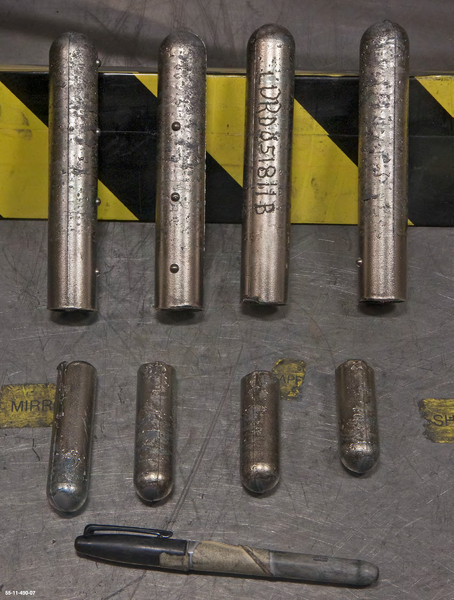
Photo from Los Alamos National Laboratory/U.S. Department of Energy.
Science has a well-reported story on a near-disaster in Los Alamos National Laboratory’s PF-4 plutonium laboratory building in 2011. As seen in the picture above, technicians decided to arrange eight plutonium rods on a table, only inches apart, in order to photograph them (simply because they looked nice). Luckily, a supervisor returned from lunch, noticed the display, and ordered the rods moved farther apart. This averted a potential nuclear chain reaction—a “criticality” event—but the building was not evacuated as protocol dictated (humans reflect neutrons, increasing the likelihood of a chain reaction).
Over the next two years, almost all of the engineers dedicated to avoiding criticality events would quit, which led in 2013 to portions of the lab being shut down for nearly four years, likely at huge cost to American taxpayers. The 2011 incident was far from the facility’s first, with accidents stretching all the way back to the facility’s opening as part of the secretive Manhattan Project in World War II. The most famous accidents were the two fatal criticality incidents involving the so-called demon core in 1945 and 1946, which killed two scientists.
The good news is that the famed laboratory’s safety standards have genuinely improved since reopening fully in 2017. It only took a near-disaster to do so.